Kilcoy State High
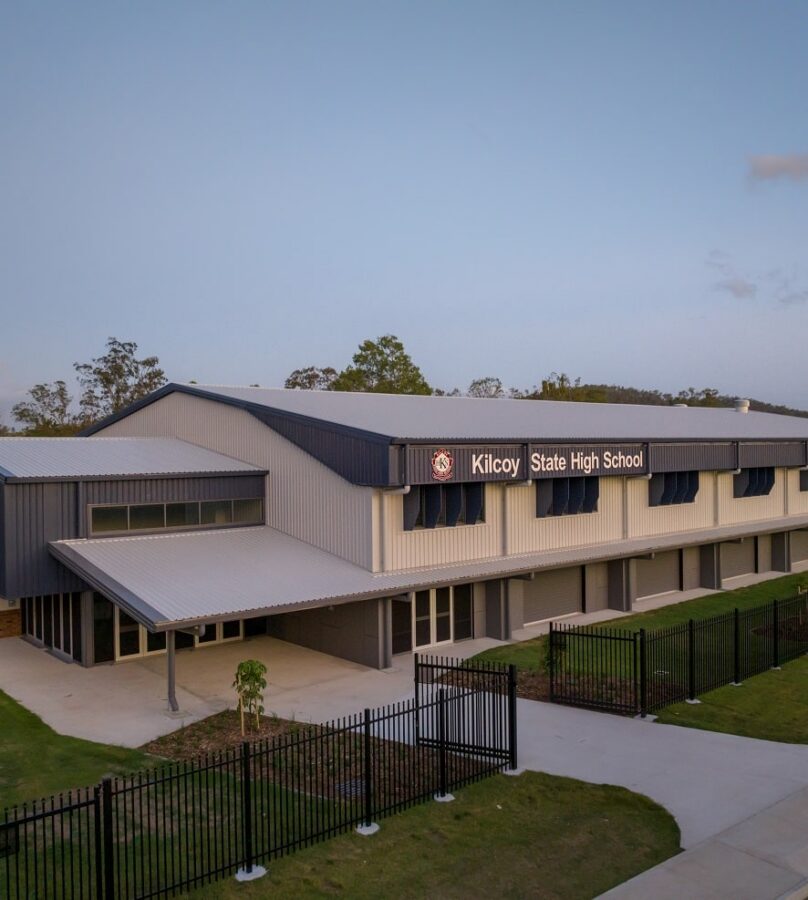

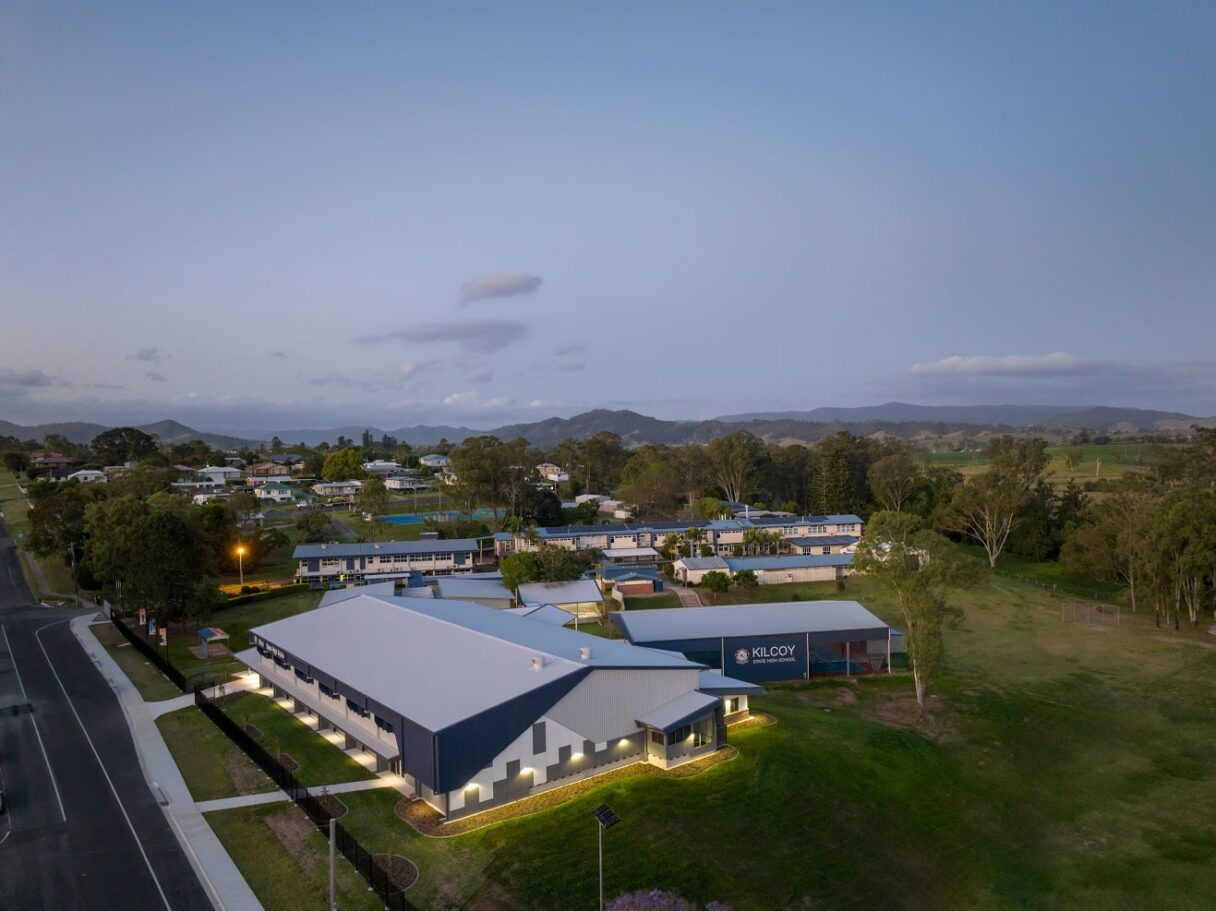
ADG delivered innovative structural and civil engineering solutions for Kilcoy State High School’s new multipurpose facility under the Queensland Government’s School Halls Program. The project transformed complex site challenges into design advantages through collaborative engineering approaches that achieved significant cost and time savings whilst creating a lasting community asset for the Somerset Region.
“This is the kind of investment that changes what a school can offer; not just for students but for the whole region, it’s a community asset built to last. We are extremely grateful for the collaboration and expertise that ADG Engineers are able to bring to the table, as a business, we are committed to delivering high quality outcomes for our community, and it is extremely important to assemble a project team that shares the same vision.”
Mitch Bentley
Bryant Building Contractors
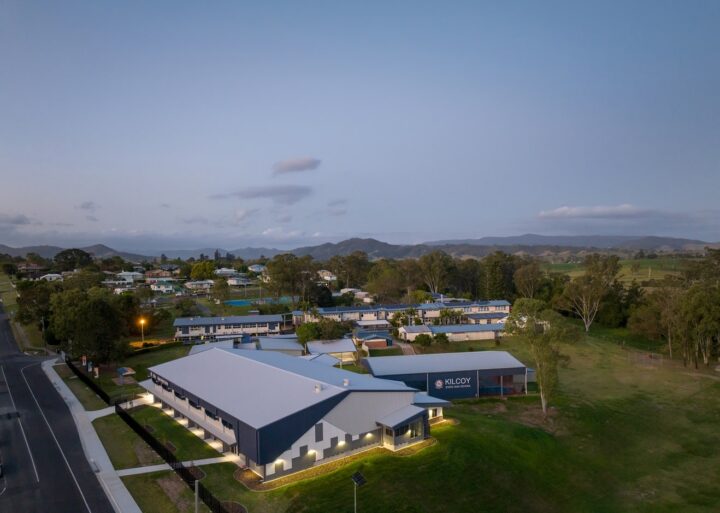
Site Complexities
- Building positioned on school’s lower oval with flood risk exposure
- Required flood-free construction during large storm events
- Complex founding soil conditions requiring geotechnical analysis
- Integration with existing overland stormwater flow paths
Infrastructure Constraints
- Traditional bored pier solutions would require expensive deep drilling through multiple soil profiles
- Operational stormwater systems needed to remain functional throughout construction
- External drainage network required major flood water conveyance capacity
- Tight construction timeline within school operational requirements
Cascading Design Requirements
- Sewerage pump station avoidance to eliminate maintenance burden and flood risk
- Material selection optimisation for cost and schedule efficiency
- Coordination with Somerset Regional Council for innovative infrastructure solutions
- Real-time constructability alignment between engineering innovation and operational requirements
Cascading Benefits Through Integrated Design
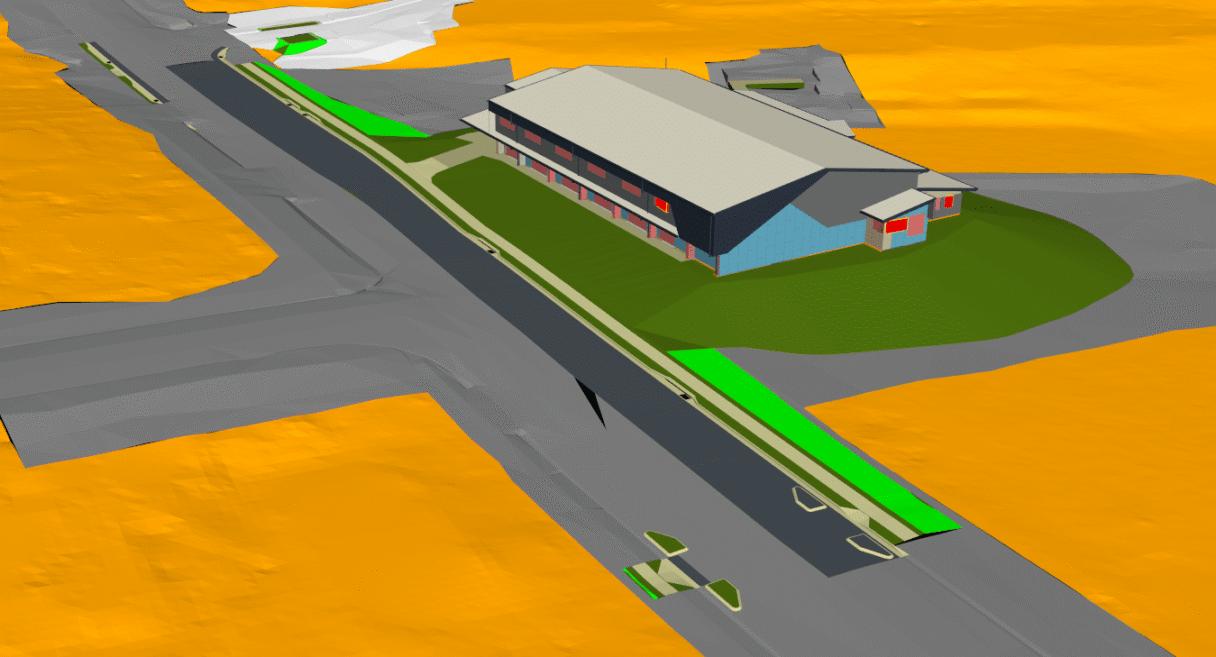
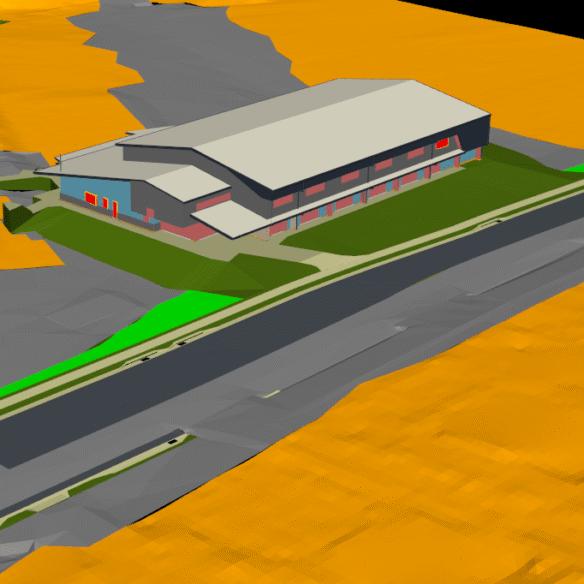
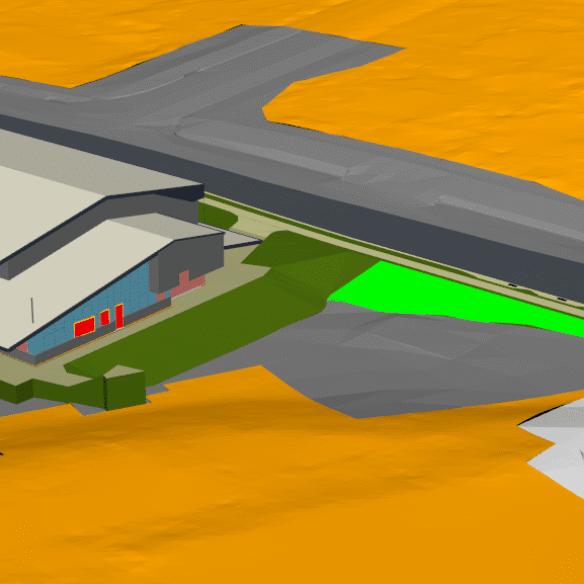
The engineered fill platform solution delivered a cascade of efficiencies that optimised the entire project. This single design decision saved several weeks on-site whilst eliminating heavy bored pier and piling works, contributing an estimated $1.5 million in total savings without compromising safety or structural performance.
The elevated building position unlocked multiple engineering advantages across all disciplines. With the finished floor level now positioned above the overland flow path and flood line, the project avoided the expense, maintenance burden and flood risk of a private sewerage pump station, enabling a gravity-fed sewer design that dramatically simplified long-term operations and eliminated the pumping infrastructure proposed in earlier design iterations.
The refined raft slab design redistributed building loads more efficiently across the engineered platform, minimising reinforcing steel requirements whilst ensuring full compliance with stringent Australian Standards. The building’s elevation above existing flood levels transformed external works requirements, the proposed external drainage network no longer needed to convey major flood waters to provide structural immunity, significantly reducing infrastructure complexity and associated costs.
Construction Methodology Advantages
Eliminating interim external stormwater diversions cut substantial costs across labour, plant hire and reinstatement activities. The streamlined approach reduced site disruption whilst accelerating construction progress. Strategic collaboration with Somerset Regional Council representatives enabled innovative material selection for stormwater infrastructure. Large diameter High-Density Polyethylene (HDPE) pipework replaced traditional concrete pipe and box culverts for internal site drainage, delivering significant cost and time savings whilst avoiding the extended lead-times typical of concrete drainage products.
Stormwater Management
One of the project’s most technically sophisticated elements involved maintaining operational stormwater infrastructure throughout the construction phase. This required seamless coordination between active drainage systems and progressive building works, a challenge that demanded precise engineering and coordinated construction timing.
Bryant Building Contractors worked with the team at ADG to develop an innovative sequencing solution that completely reimagined the previously proposed external roadworks and stormwater approach. The redesigned system enabled the site’s primary stormwater line to remain fully operational during construction, eliminating service disruptions whilst new infrastructure was systematically installed and commissioned.
The carefully orchestrated cutover process ensured continuous drainage capacity until the replacement system achieved full operational status. Once the new infrastructure was commissioned and the existing line decommissioned, the redundant pipework required strategic abandonment to prevent future ground instability. The team employed pressure-controlled injection grouting, a specialised technique that fills void spaces whilst preventing soil collapse and sinkhole formation in surrounding areas. This method ensures long-term ground stability and eliminates potential subsidence risks that could impact adjacent infrastructure or landscaping.
Foundation Innovation
- Designed custom-engineered fill platform eliminating bored pier requirements
- Developed controlled engineered fill pad achieving flood-free finished floor levels
- Created refined raft slab foundation optimised for manufactured platform conditions
- Implemented strategic fill placement with advanced compaction methodologies
Integrated Engineering Solutions
- Enabled gravity-fed sewer design by elevating building above flood line
- Replaced concrete drainage with large diameter HDPE pipework for internal site systems
- Developed innovative construction sequencing maintaining operational stormwater during works
- Applied pressure-controlled injection grouting for redundant pipeline abandonment
Collaborative Design Process
- Real-time constructability testing with contractor throughout design development
- Strategic coordination with Somerset Regional Council for innovative material selection
- Comprehensive soil behaviour modelling under varying loads
Financial Impact
- $1.5 million total project savings without compromising safety or performance
- Eliminated sewerage pump station costs and ongoing maintenance burden
- Reduced concrete consumption and excavation requirements
Schedule Benefits
- Several weeks saved on construction timeline
- Eliminated heavy bored pier and piling works
- Enabled bulk earthworks parallel with building fabrication
- Zero stormwater service disruptions during construction
Technical Performance
- 100% flood immunity achieved above overland flow path
- Enhanced structural stability through manufactured foundation platform
- Simplified long-term operations with gravity-fed infrastructure
- Superior foundation performance compared to traditional deep foundation systems
Community Outcome
- Delivered versatile facility serving educational and community functions
- Competition-standard basketball court and professional performance stage
- Universal accessibility compliance throughout
- Community asset strengthening regional social connections
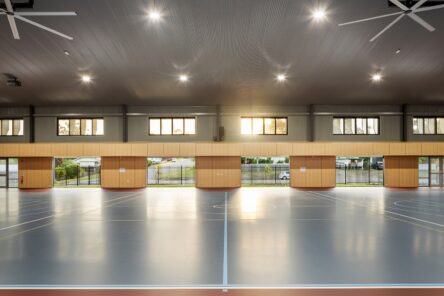
The completed multipurpose hall serves both educational and community functions through:
- Competition-standard basketball court
- Professional performance stage with acoustic treatment and lighting
- Flexible learning spaces with operable wall systems
- Universal accessibility compliance throughout
- Community kiosk for events and local gatherings
- Energy-efficient building systems aligned with sustainability objectives
Let’s chat.
When site constraints threaten project feasibility, you need engineers who turn challenges into advantages. Let’s talk about your next education infrastructure project.
Meet the team or connect with your local ADG office.

Related Projects
Caboolture Special School
Campus Perth Student Accommodation